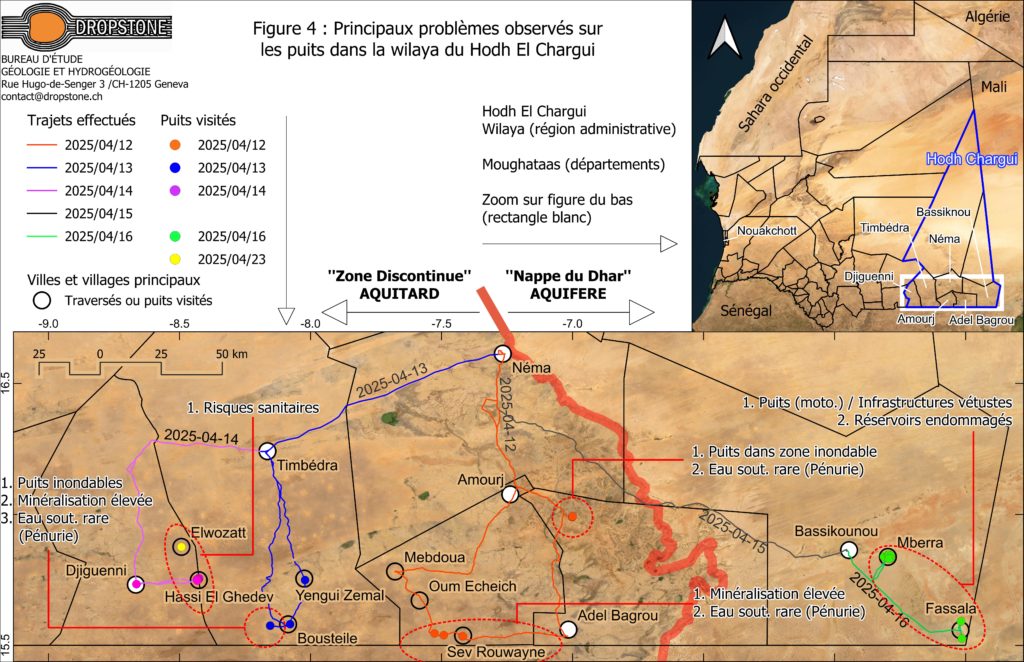

The Geneva Water Hub, as part of its “Water for Peace” initiatives, commissioned DROPSTONE to conduct an exploratory groundwater assessment in the Hodh El Chargui region of eastern Mauritania.
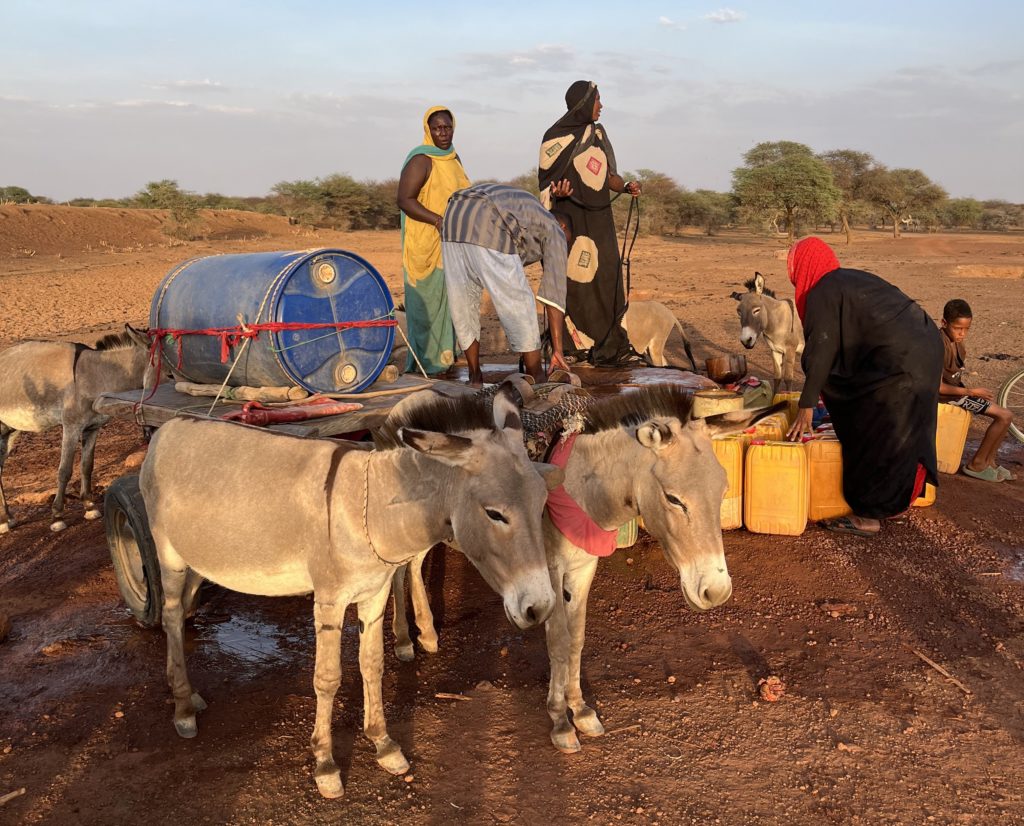
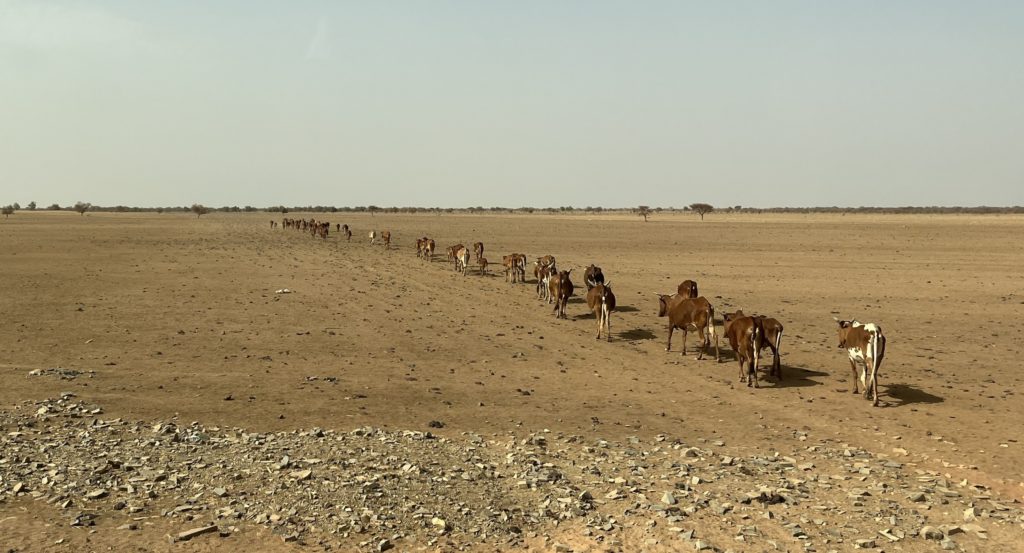
The region has faced growing pressure on water resources due to the large influx of refugees fleeing insecurity in neighboring Mali. In this predominantly pastoral area, groundwater is essential for both domestic use and livestock watering. Hodh El Chargui now hosts nearly one-third of Mauritania’s national herd, making access to reliable groundwater supplies both a humanitarian and socio-economic priority. In such a fragile context, water management can either fuel tensions or serve as a foundation for cooperation between host communities and refugees.
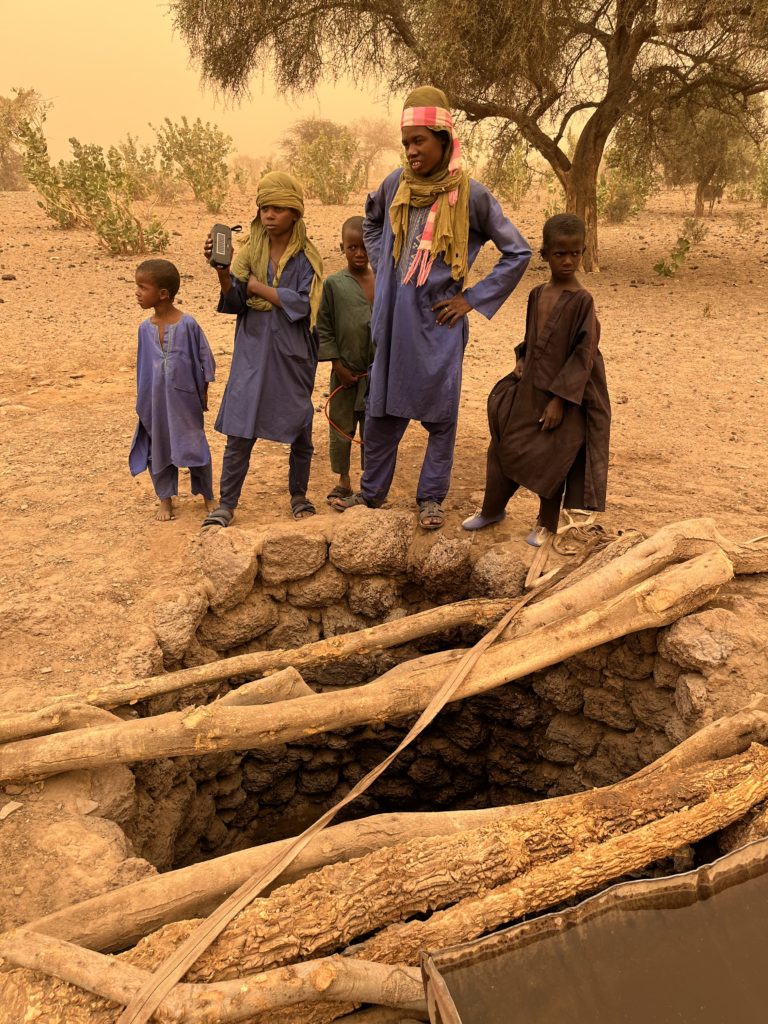
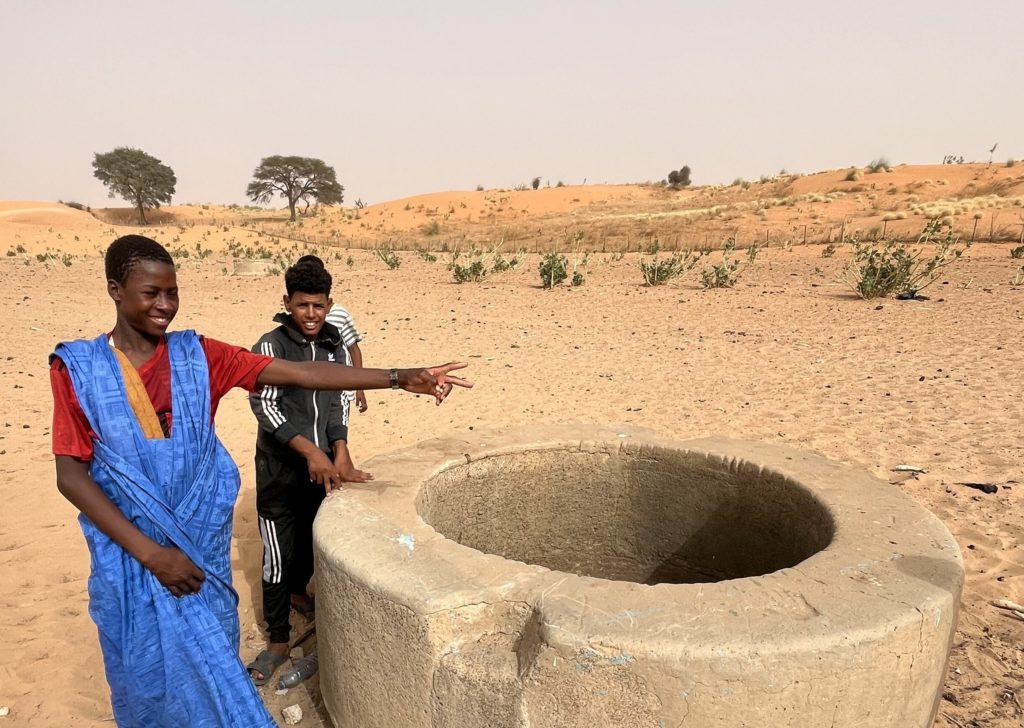
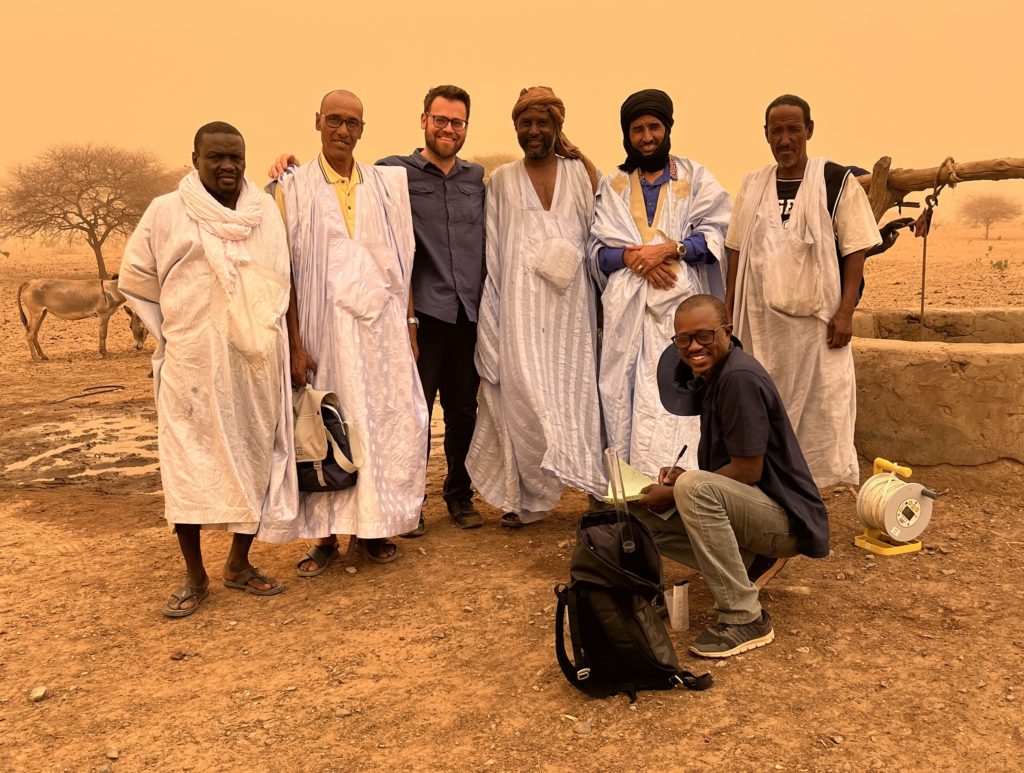
Mandated to support national and regional authorities, DROPSTONE carried out stakeholder consultations to map institutional roles, identify priorities, and clarify operational challenges, alongside technical inspections of sensitive wells and boreholes. This combined approach enabled a comprehensive assessment of groundwater conditions and the identification of priority interventions.
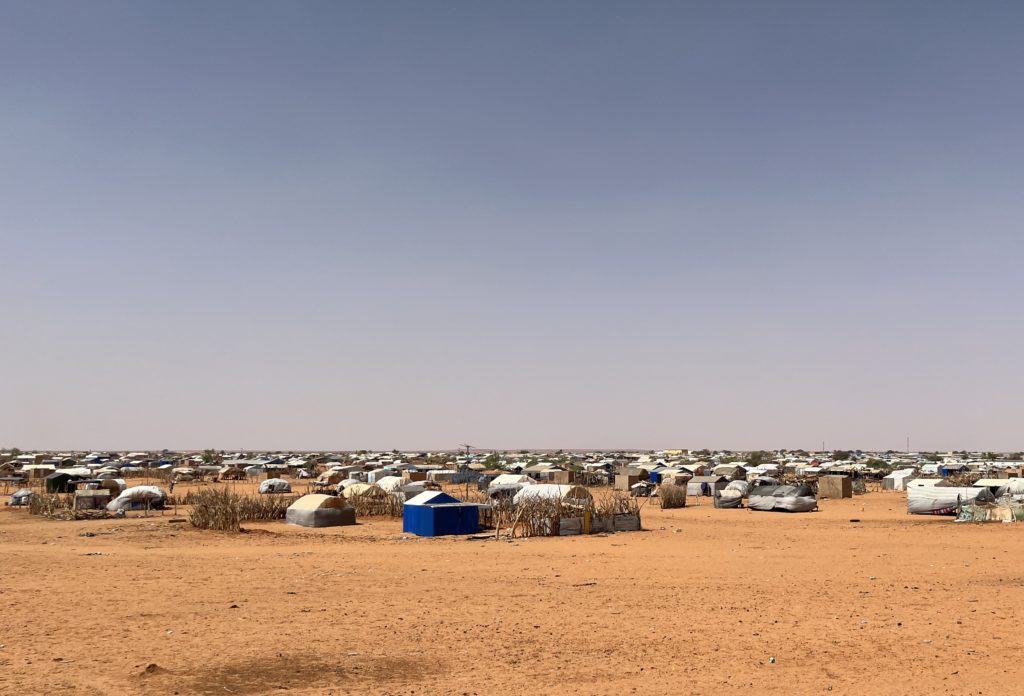
The mission also visited the Mbera Refugee Camp to evaluate existing WASH infrastructure. Hosting tens of thousands of refugees, it has grown into the country’s second-largest agglomeration after Nouakchott, further intensifying pressure on local water resources.
By strengthening groundwater knowledge, DROPSTONE contributes to positioning water management as a lever for stability, cooperation, and long-term resilience in one of the Sahel’s most sensitive regions.