
DROPSTONE Advisory Services

Humanitarian Affairs & Development

Categories

Hydrogeological Support – Rural Water Programme – Tunisia

The engagement began with an evaluation of the project in 2013, which led to the recommendation for a complete strategic realignment. Following this assessment, comprehensive managerial and technical support was provided over a five-year period (2013–2017) to support the restructured programme. A backstopping mandate was awarded to DROPSTONE to ensure the technical and institutional support of the “Projet Eau Kasserine” (PEK). This included the implementation of 15 large-scale rural drinking water and irrigation projects, supported by specialized hydrogeological expertise for groundwater monitoring and the sustainable use of natural resources. The programme also placed strong emphasis on capacity building, with training

Read More »

Access to Upper Gorkha and Manaslu Again Possible!

The cantilever bridge has been finalised in 2015. It is again possible to walk all the way up to the Upper Gorkha district, on foot or with mules, for the first time since the earthquake struck Nepal in April 2015. This is a relief for the local people and also the trekkers that can now reach Manaslu Conservation Area safely. This work was financed by DfID and implemented by AF-ITECO. DROPSTONE provided advisory support for the geological feasibility study. Below is the aerial view of the meandre taken in November last year during the assessment of works. The washed away

Read More »

Evaluation and Backstopping – WASH Response to Floods in Pakistan

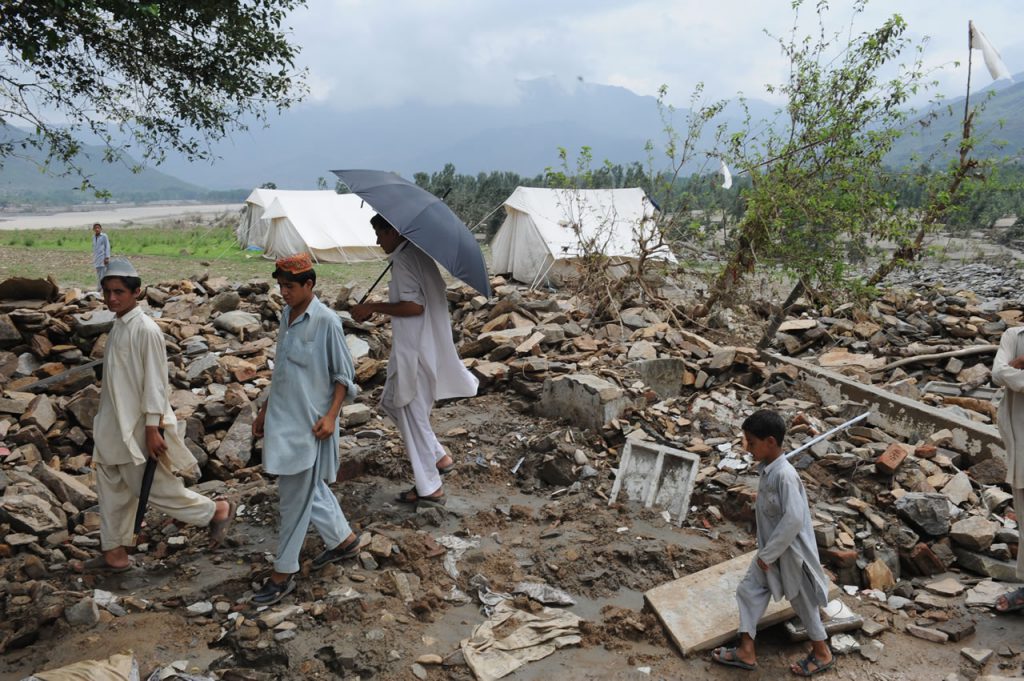
Following the 2010 massive floods in Pakistan, Dropstone conducted an initial evaluation mission to assess vulnerabilities, impacts, and priority intervention areas in the water sector. This mission informed subsequent technical backstopping and strategic advisory support to the WASH programme of Swiss Humanitarian Aid (SHA). Pakistan faces recurring water-related hazards, including flooding, water scarcity, and widespread water-borne diseases, compounded by poverty, population growth, climate change, conflict, and limited public investment in the water, health, and education sectors. Vulnerability is particularly high in Khyber Pakhtunkhwa and the former FATA, where communities are regularly exposed to floods, droughts, landslides, and public health risks

Read More »